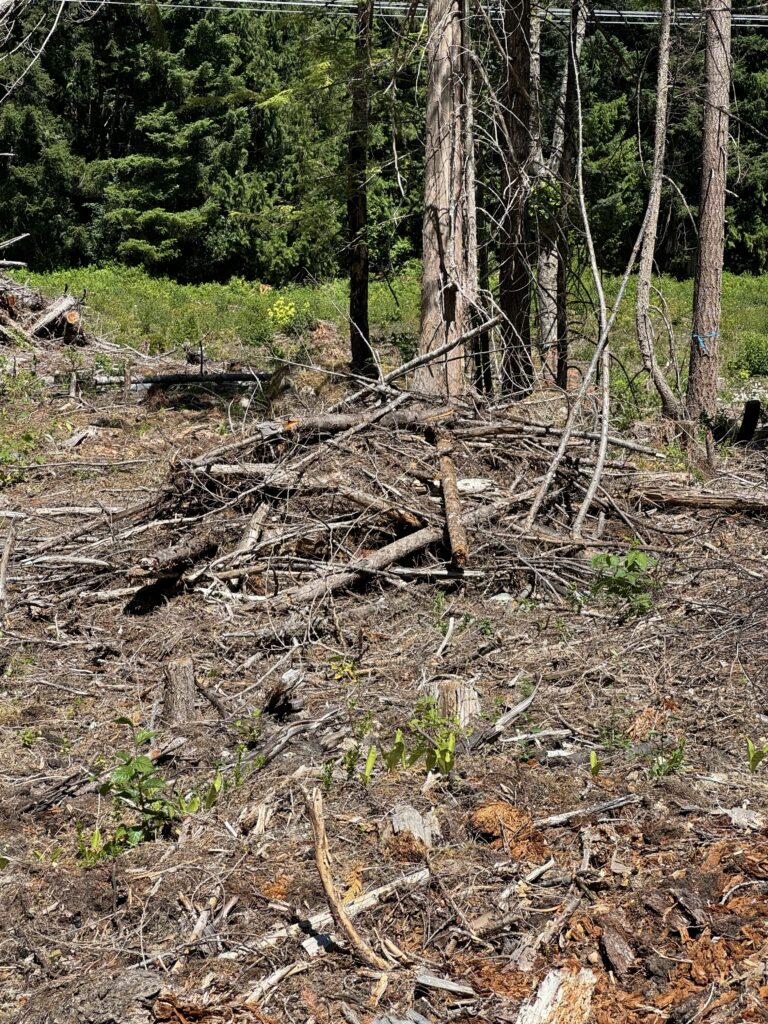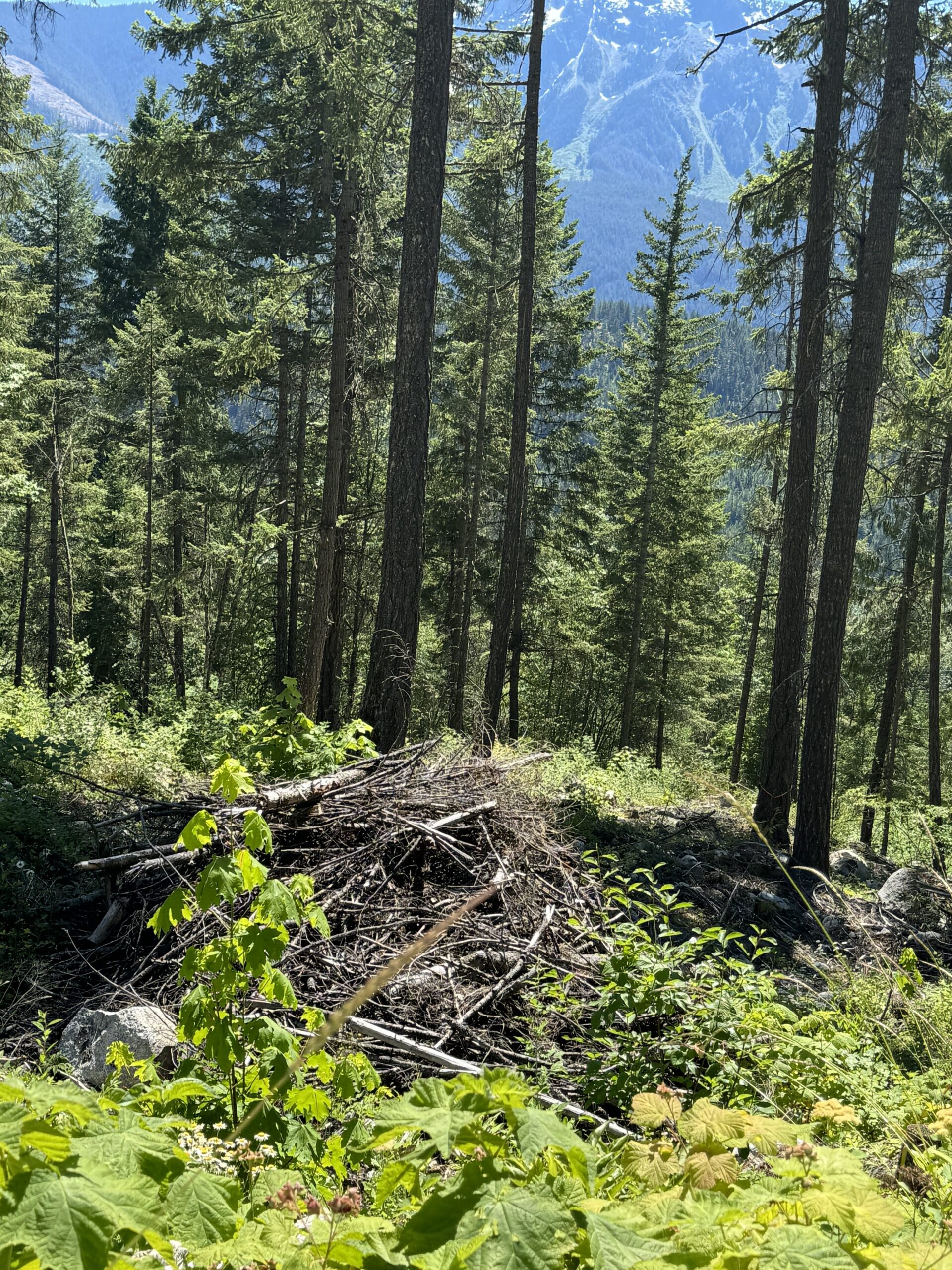
Líl̓wat Forestry Ventures Ltd. (LFV), the Líl̓wat Nation’s forestry company, is committed to forest stewardship, placing emphasis on ecological health, cultural values, and community benefit. This is reflected on the ground through its forestry practices, where critter piles are part of their work to support wildlife, reduce wildfire risk, and return organic material back to the soil after logging.
Once logging operations are completed, there are two types of piles left behind: burn piles, also known as waste piles, and critter piles. The main difference between them is size. Critter piles are small, usually about one metre long and one metre tall, while burn piles are much larger and made up of bigger wood material.
“Critter piles provide habitat for smaller wildlife,” said Hayden Leo, Forestry Technician with LFV. “Birds, squirrels, mice, and other rodents use them. It gives them a place to rest and shelter.”
Critter piles are used alongside retention trees, which are those left standing after logging. Together, they help maintain habitat across the area by providing places for birds to perch and spaces for small animals to stay protected on the ground.
The piles are spread out across the block, and the area around them is cleared. This is done with wildfire risk in mind.
“If there was a wildfire, it wouldn’t travel far because the fuel is broken up,” said Leo. “By spacing things out and clearing around the piles, we’re reducing the chance of fire moving continuously across the landscape.”
Over time, the piles break down and return organic material to the soil, which supports the land over the long term.
“If we leave that material on the land, it will eventually decompose and act as compost, putting nutrients back into the soil,” Leo added.
Spacing and placement are also important considerations. If the critter piles are too close together or not cleared properly, they can increase wildfire risk. At the same time, having too few piles can reduce habitat for wildlife.
“It’s about finding that balance,” said Leo. “We’re thinking about stewardship and making sure we’re supporting wildlife while managing wildfire risk in a responsible way.”
The planning for critter piles starts with the site plan forester, and the piles are created during logging operations. They are also located away from homes and public areas, with the community’s safety at the top of mind.
Overall, critter piles reflect a growing approach in forestry that considers not just resource extraction, but long-term land health and biodiversity. By incorporating these practices into everyday operations, LFV demonstrates how small, thoughtful actions on the ground can contribute to a more balanced and resilient forest ecosystem for the future.