
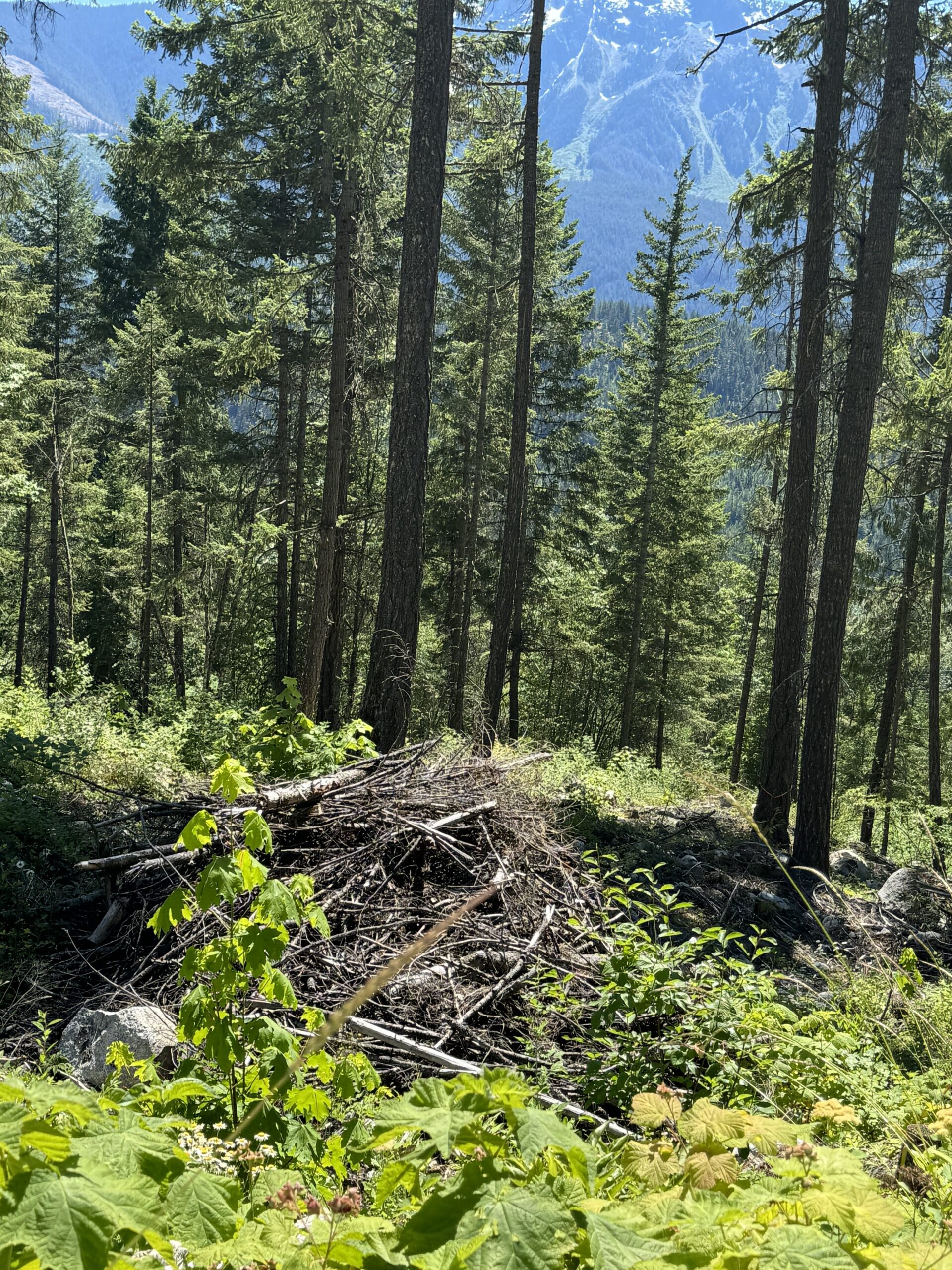
For generations, the Líl̓wat Nation has understood that healthy forests require active care. Today, that knowledge is being combined with modern Western forestry science to better protect communities, restore ecosystems, and create more resilient forests for future generations.
Speaking during a recent Forest Hall webinar hosted by the Standing Committee on the Environment and Economy, Líl̓wat Forestry Ventures’ General Manager Klay Tindall, Registered Professional Forester, shared how the Nation is working to transform the way forests are managed by utilizing Indigenous knowledge, ecological restoration, and innovative forestry practices.
Over the past 15 years, Líl̓wat Forestry Ventures (LFV), the forestry division of Líl̓wat Nation, has grown from a small operation with no harvesting activities into a diverse forestry organization employing nearly 50 people, the majority of whom are members of the Líl̓wat Nation or neighbouring N’Quatqua First Nation. In addition to sustainable harvesting, LFV now leads wildfire response, fuel-management, ecosystem restoration, and cultural burning initiatives throughout the region.
Rethinking Forest Management
The presentation focused on a simple but important message: protecting forests means actively managing them.
Over the past two decades, increasingly severe wildfires have dramatically changed the landscape throughout Líl̓wat territory. Thousands of hectares of forest have burned, including culturally significant areas, important wildlife habitat, and forests communities rely on. These experiences have reinforced that simply setting forests aside is no longer enough to protect them.
Instead, LFV has adopted a proactive approach centred on strategic tree thinning, ecosystem restoration, and cultural burning. Rather than managing every area in the same way, the work considers what each forest needs and the ecological and cultural values it should support.
In many areas, restoration involves selectively removing smaller trees to create more open forests while retaining larger, healthy trees. In others, the objective may be to improve wildlife habitat, encourage the return of culturally important plants and foods, strengthen old-growth characteristics, or prepare an area for cultural burning.
The goal is to restore healthier forest conditions that can better support the many values Líl̓wat Nation members rely on while reducing the potential impacts of catastrophic wildfire.
Restoring the Forest Through Fire
One of the most significant components of this work is the reintroduction of cultural burning. Working alongside Elders, knowledge holders, BC Wildfire Service, and researchers from the University of British Columbia, LFV is helping restore the traditional use of carefully planned, low-intensity fire.
These burns reduce fuel build-up while encouraging the return of culturally important plants and traditional food sources that have declined as forests have become denser over the past century. Modern technology, including infrared drones, detailed burn plans, and extensive monitoring, helps ensure the burns are carefully managed and conducted safely.
Indigenous Knowledge and Science Working Together
In the presentation, UBC wildfire researcher Dr. Lori Daniels described how decades of research show that many British Columbia forests historically experienced frequent, low-intensity fires. She noted that today’s dense forests are, in many areas, the result of more than a century of fire suppression and changing land management practices.
Researchers are now working alongside LFV to combine scientific monitoring with the knowledge of Líl̓wat Elders and knowledge holders. Together, they are studying historical fire patterns and monitoring the outcomes of cultural burns to help guide future ecological restoration and fuel-management work.
Supporting Communities and Local Employment
This work also creates meaningful employment and builds local capacity. LFV employs trained forestry professionals, wildfire crews, and heavy equipment operators while providing high-quality employment opportunities for Nation members.
The organization also benefits from significant wildfire expertise within its workforce. Some LFV firefighters have more than 30 years of experience, strengthening the organization’s ability to undertake fuel-management work and respond when communities are threatened by wildfire.
Looking Ahead
As British Columbia faces the effects of a changing climate and increasingly severe wildfires, the experience of LFV demonstrates another way of thinking about forest stewardship, one that considers what forests need to remain healthy and what communities need from the forests around them.
For LFV, the work includes reducing wildfire risk and rehabilitating forests so they can continue supporting cultural values, wildlife, communities, and future generations.